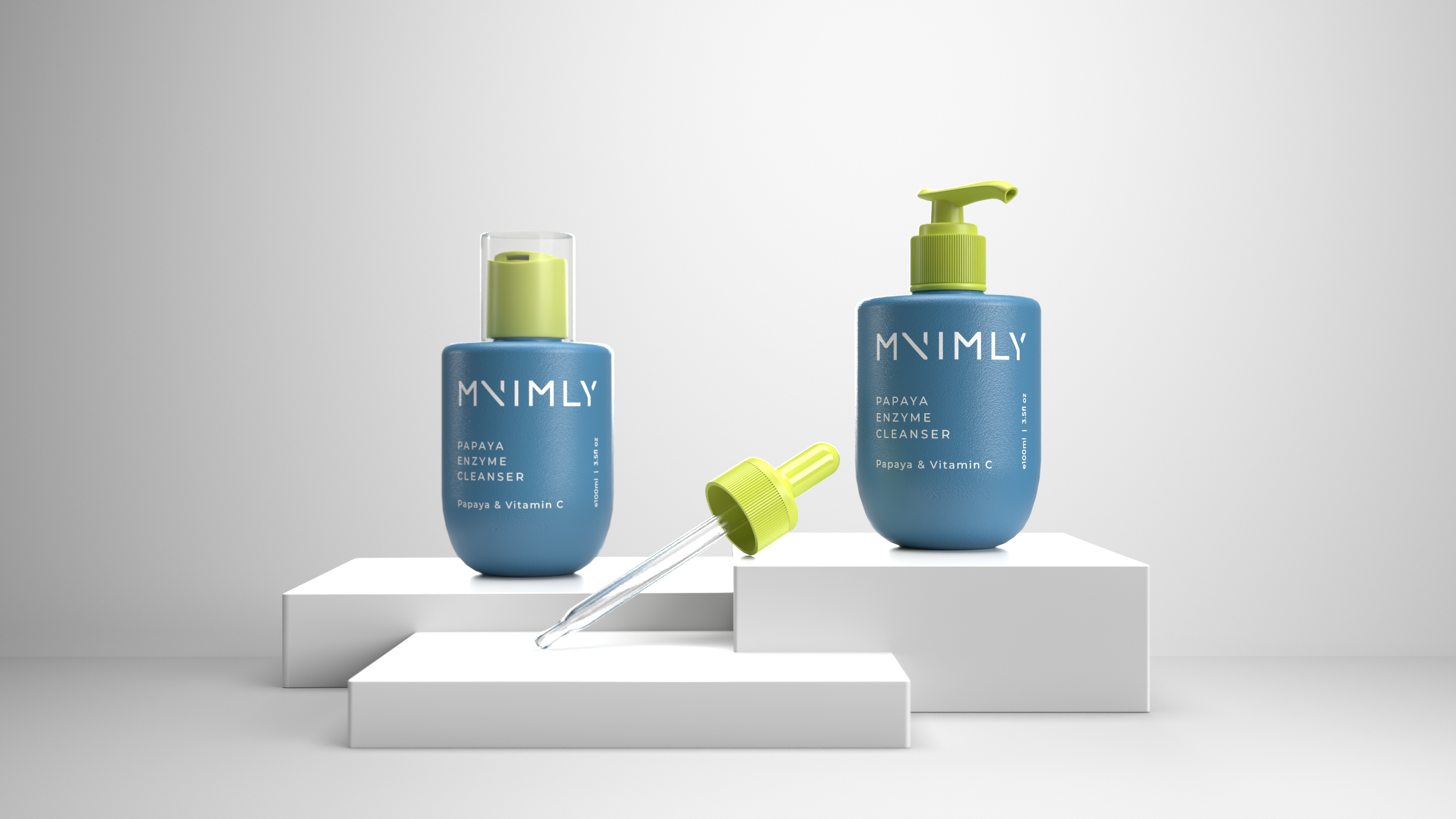
Eco-friendly packaging design builds customer trust by communicating brand values at the point of first contact. Sustainable materials, purposeful design choices, and a cohesive visual identity don’t just reduce environmental impact; they strengthen brand confidence, support long-term growth, and give businesses a measurable competitive edge.
There’s a moment that happens long before a customer tries your product. They see the packaging. They pick it up, feel the weight of it, read what’s on the surface. And in that brief exchange, they form a judgment about your quality, your values, and whether your brand is worth their trust.
For businesses selling into a market where sustainability is no longer a differentiator but an expectation, that moment carries more weight than ever. Customers aren’t just evaluating whether a product does what it claims. They’re evaluating whether the brand behind it reflects what they care about. Packaging is where that question gets answered immediately, viscerally, and without a word being spoken.
Rooland, a boutique branding and sustainable packaging design studio based in Wollongong, New South Wales, has spent over a decade helping product brands navigate this challenge. Founded by Suzanne Haddon a designer with more than 25 years of experience across global brands including Nike, Max Factor, and Starbucks, Rooland approaches eco-friendly packaging not as a compliance exercise, but as a creative and strategic opportunity. The studio’s work consistently demonstrates that sustainable packaging, crafted with purpose, can become one of a brand’s most powerful commercial assets.
This post explores how purposeful eco-friendly packaging design builds customer trust, communicates brand values, and supports long-term business growth and what it takes to get it right.
Why Do Customers Trust Eco-Friendly Packaging More Than Conventional Alternatives?
Trust is not built through claims. It’s built through evidence the kind customers can see, touch, and interpret at a glance. Eco-friendly packaging provides that evidence in tangible form.
When a brand chooses FSC-certified paperboard over generic glossy white, or uses soy-based inks and biodegradable finishes instead of conventional coatings, those decisions are visible. The texture of the material, the quality of the print, the way the box is structured all of it communicates intention. Customers who value sustainability read those signals accurately. They recognise deliberate choice when they encounter it, and they respond with confidence.
According to the Paper and Packaging Board (2018), 72% of consumers say packaging design influences their purchasing decisions. Separate research from Ipsos found that 81% of consumers have tried something new because the packaging caught their eye. These numbers reflect something important: packaging doesn’t just support the sale. In many cases, packaging is the sale the decisive moment between interest and commitment.
For brands targeting sustainability-conscious buyers, eco-friendly packaging closes that gap faster than almost any other brand investment.
What Does Eco-Friendly Packaging Actually Communicate About a Brand?
Every material choice sends a signal. Every structural decision tells part of the story. The question isn’t whether your packaging communicates it always does, but whether it communicates the right things.
Brands that invest in eco-friendly packaging design signal several things simultaneously:
- Environmental responsibility: The use of biodegradable, compostable, or recycled materials demonstrates a genuine commitment to reducing impact, not just a marketing position.
- Attention to detail: Premium sustainable materials, when executed well, communicate craft and care. They suggest a brand that doesn’t cut corners.
- Alignment with customer values: Packaging that reflects sustainability tells environmentally conscious customers that the brand understands them and that shared values are built into the product experience.
- Long-term thinking: Brands that invest in sustainable packaging are making a statement about the future. Customers notice that, and reward it with loyalty
The challenge is ensuring that the material choices and the visual design work together. Sustainability credentials without visual coherence produce packaging that feels earnest but unrefined. Strong design without sustainable materials produces packaging that looks good but rings hollow for customers who look closer.
The most effective eco-friendly packaging achieves both. It’s the intersection of environmental integrity and design excellence, and that intersection requires genuine expertise to navigate.
How Does the Material Choice Shape the Brand Story?
At Rooland, sustainable material selection isn’t an afterthought or an optional upgrade. It’s integrated into the design process from the first conversation.
The studio advises clients on a range of eco-friendly options, including FSC-certified paper, recycled substrates, soy-based inks, biodegradable and compostable materials, and bagasse, a sugarcane byproduct used as an alternative to plastic or foam. Each of these materials has specific properties: how it prints, how it handles, how it ages. Understanding those properties is what allows a designer to use them beautifully, not just responsibly.
For brands like BAMM and PhycoHealth, this alignment between material and mission is foundational. Sustainable packaging isn’t a feature they promote it’s proof of a position they hold. When customers encounter that proof in physical form, it deepens their trust in ways that no marketing copy can replicate.
Dr Pia Winberg, Owner, Director and Seaweed Scientist at PhycoHealth, has worked with Rooland for over a decade across food, skincare, and supplement packaging. Her reflection on the partnership is direct: “Sustainable packaging is more than just a box; it’s a powerful reflection of a brand’s values. When done right, it builds trust, fosters loyalty, and attracts customers who truly care about sustainability. Rooland’s commitment to long-term design thinking made them the obvious choice for us, and they exceeded every expectation.”
That kind of long-term creative partnership built on shared values and consistent execution iis what Rooland’s studio model is designed to produce.
Where Does Purposeful Eco-Friendly Packaging Design Actually Begin?
The most common mistake brands make when approaching sustainable packaging is starting with materials. Materials matter, but they’re not the starting point.
Purposeful packaging design begins with understanding the brand, its values, its audience, its competitive context, and the emotional experience it wants to create. Only when those foundations are clear can material and structural decisions be made with real intent.
Rooland’s discovery process is built around this principle. Before a concept is developed, the studio invests time in understanding what a brand stands for and who it’s speaking to. That understanding shapes every subsequent decision, from the colour palette to the substrate to the way a box opens.
This is the detail that separates packaging that converts from packaging that merely contains. Jessica DeAngelis and Julie Markovska, Managing Directors and Founders at Ben & Ellie Baby, describe the experience of working with Rooland this way: “She understood that even as a start-up we were trying to balance our customer experience and environmental impact and came up with a solution where we didn’t have to compromise on either. We worked closely with Suzanne and Alix, who kept us on track and were tireless in their pursuit of helping us find the right solutions and make the right selections for our packaging and brand identity.”
That outcome customer experience and environmental integrity, without compromise is the standard Rooland sets for every project. Explore Rooland’s eco-friendly brand design work to see how this translates across industries and product formats.
Can Eco-Friendly Packaging Support Business Growth Without Creating New Constraints?
This is the question most business owners eventually ask. And it’s the right one.
Sustainable packaging has a reputation, sometimes earned, sometimes not for being limiting. Limited colour ranges. Limited structural options. Higher costs. The concern is that choosing eco-friendly materials means accepting trade-offs that compromise the brand or strain the budget.
In practice, the reality is more nuanced. And for businesses that work with a studio experienced in sustainable design, those trade-offs are largely avoidable.
The key is designing packaging systems, not individual pieces. When packaging is developed as a cohesive system with a defined visual language that can extend across formats, variants, and product lines, it scales without losing coherence. Brands don’t need to start from scratch every time they add a SKU or enter a new market. The foundation does that work for them.
Rooland’s work for Wolf & Woman demonstrates this clearly. The brand’s visual identity extends cohesively across packaging formats, ensuring every customer touchpoint, physical and digital, reinforces the same story. That consistency is what builds recognition over time. And recognition, compounding across interactions, is what drives repurchase.
For brands approaching launch or considering a repackaging initiative, designing for scalability from the outset is one of the highest-return decisions they can make. The cost of rebuilding a packaging system later in time, creative fees, and production disruption almost always exceeds the cost of getting it right the first time.
Why Do Considered Brands Choose Purposeful Packaging Over Trend-Driven Design?
Trends move quickly. What feels fresh in a category today can feel dated within eighteen months. Brands that chase trends in their packaging often find themselves back at the drawing board sooner than expected and carrying the cost of that cycle.
Purposeful packaging takes a different orientation. Rather than asking what’s trending right now, it asks what this brand needs to communicate and how to express it in a way that will hold up over time. That shift in question produces dramatically different design outcomes.
At Rooland, the studio develops over 100 original logo concepts per project a standard that far exceeds typical industry practice. This isn’t creative excess. It’s thoroughness. The process ensures that the final direction is genuinely the strongest expression of the brand, not the first idea that felt good enough.
The result is packaging that earns its place in a product line for years, not months. For small and medium consumer goods businesses operating with careful budgets, that longevity has real financial value independent of the environmental benefits.
Patrick Hoptman, Director of Sales & Marketing at Daily Grind Coffee Roasters, captured the experience well: “With a limited submitted brief, the team responded enthusiastically with an outstanding concept right from the first draft. Their professionalism in their dealings is commendable, and meeting their timeframes was always top of mind.”
Packaging That Reflects the Business Behind It
Eco-friendly packaging, when it’s designed with genuine purpose, does something that transactional packaging cannot: it builds a relationship. Every time a customer encounters the packaging on the shelf, during unboxing, in a photograph shared online they’re not just seeing a container. They’re being reminded of what the brand stands for, and why they chose it.
That cumulative effect trust compounding over time, values reinforced across interactions is the real commercial case for sustainable packaging design. Not the cost of materials. Not the regulatory compliance. The customer relationship it builds and sustains.
Rooland’s studio exists to make that outcome achievable for businesses that take their brand seriously. With over 25 years of creative experience, a genuine commitment to eco-friendly materials, and a process built around producing work that is thoughtful, original, and commercially effective, Rooland brings the expertise required to turn a packaging brief into a brand asset.
If your product deserves packaging that reflects the care that went into making it, get in touch with the Rooland team and start the conversation.
FAQ: Eco-Friendly Packaging Design Questions
What is eco-friendly packaging design, and how is it different from conventional packaging?
Eco-friendly packaging design uses sustainably sourced or recycled materials such as FSC-certified paper, compostable substrates, recycled board, and soy-based inks to reduce environmental impact throughout production, use, and disposal. The key difference from conventional packaging is that material selection and design decisions are evaluated against both visual and environmental criteria from the outset, rather than being treated as separate concerns.
How does eco-friendly packaging build customer trust?
Eco-friendly packaging communicates brand values through physical, tangible evidence. When customers encounter materials that are clearly sustainable in texture, finish, or print quality, they recognise intentional decision-making. According to the Paper and Packaging Board (2018), 72% of consumers say packaging influences their purchasing decisions. For brands targeting sustainability-conscious buyers, this is often the decisive factor at the point of purchase.
Is sustainable packaging design more expensive than conventional options?
Not necessarily. Some eco-friendly materials carry a slightly higher upfront unit cost, but sustainable packaging typically reduces long-term waste, supports stronger customer retention, and aligns with growing market demand for environmentally responsible brands. Rooland works with clients across a range of budgets to identify solutions that are both cost-effective and high impact.
Can eco-friendly packaging scale as a product line grows?
Yes provided the packaging system is designed for scalability from the beginning. Rooland designs packaging as cohesive visual systems, not isolated pieces, so the design language established at launch can extend across new variants, formats, and markets without requiring a full redesign. This systems-thinking approach is particularly valuable for brands planning to scale within 12 to 24 months of launch.
What eco-friendly packaging materials does Rooland work with?
Rooland advises clients on a range of sustainable materials including FSC-certified paper, recycled substrates, soy-based inks, biodegradable finishes, compostable packaging, and bagasse, a sugarcane-based alternative to plastic and foam. Material selection is always evaluated in the context of the brand’s visual and structural requirements, not recommended in isolation.
Does eco-friendly packaging work for product launches and rebrands?
Yes. Sustainable packaging is equally relevant for businesses launching a new product and those refreshing an existing range. For new launches, it establishes the brand’s environmental credentials from the first customer interaction. For rebrands, it signals a meaningful evolution in values one that customers and retail buyers increasingly respond to positively.
How does Rooland approach eco-friendly packaging projects differently from other design studios?
Rooland integrates sustainable material selection into the design process from the very first conversation it’s not presented as an add-on or an upgrade tier. The studio produces over 100 original logo concepts per project, bringing a depth of creative exploration that ensures the final design direction is the strongest available option. Rooland’s cross-category experience spanning food, supplements, skincare, technology, and lifestyle means the studio brings a perspective that isn’t constrained by the conventions of any single industry.